
The Ultimate CLEP and DSST Practice Exam Strategy: Pass Faster in 2026
- Feb 20
- 5 min read
Practice exams aren't just helpful for CLEP and DSST preparation: they're absolutely essential.
Are you using them the right way?
Most students treat practice tests as a final check before exam day. That's a mistake. The most effective test-takers use practice exams as their primary study tool from day one. Here's how to build a practice exam strategy that actually works.
Know What You're Up Against
Both CLEP and DSST exams follow a computer-based format with 100 multiple-choice questions. Here's where they differ: CLEP gives you five answer choices per question, while DSST offers four options.
Neither exam includes essay questions or writing portions, which simplifies your preparation significantly. You're training for one skill: selecting the correct answer from multiple options under time pressure.
Understanding this format shapes your entire study approach. You're not preparing to write essays or explain concepts in detail. You're building pattern recognition and content recall.
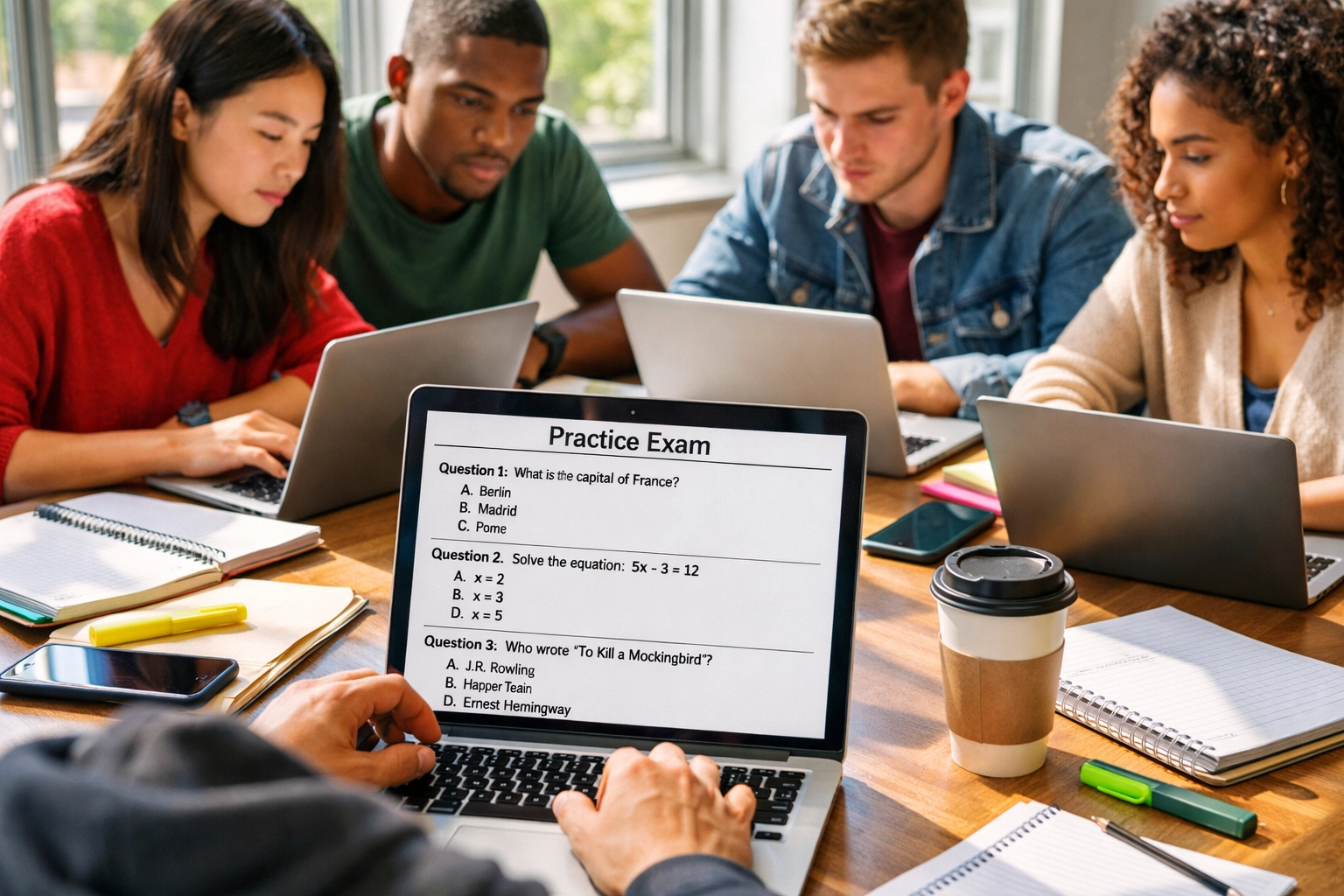
Why Practice Exams Should Drive Your Study Plan
Practice exams serve three critical functions that reading textbooks alone can't match.
First, they expose gaps in your knowledge before test day. You might think you understand a topic until a practice question reveals you've missed a key concept entirely.
Second, practice tests build mental stamina for the actual exam environment. Sitting through 100 questions requires focus and endurance you can only develop through practice.
Third, they reduce test anxiety by eliminating surprises. When you've already experienced the exam format, question styles, and time pressure during practice, the real test feels familiar instead of intimidating.
Quick Credit Academy's study portal includes practice materials specifically designed to match actual CLEP and DSST exam formats for this exact reason.*
Start With Official Resources
Your practice strategy should begin with official materials from the test creators themselves.
For CLEP exams, the College Board offers an Official Study Guide covering all 34 CLEP exams. This resource includes sample questions, exam descriptions, and scoring information that reflects the actual test content.
For DSST exams, download the free Fact Sheets from Prometric. These PDFs provide content outlines, topic breakdowns, and reference materials used to create each exam.
Why start here? Because unofficial practice materials sometimes include content that won't appear on your actual exam. Official resources keep your study time focused on relevant material.
Prometric also offers free online practice exams for most DSST subjects: approximately 50 questions each on the actual testing platform. Taking these lets you experience the computer interface before test day at zero cost.
Build Your Three-Phase Practice Strategy
Effective practice follows a specific sequence, not random test-taking.
Phase One: Diagnostic Practice (Week 1)
Take one full-length practice exam before studying any content. Don't worry about your score: this test identifies which topics need the most attention.
Review every question you missed and note which content areas they cover. This creates your personalized study focus list.
Phase Two: Targeted Practice (Weeks 2-4)
Study one topic at a time, then immediately take practice questions on that specific content. This reinforces learning while it's fresh.
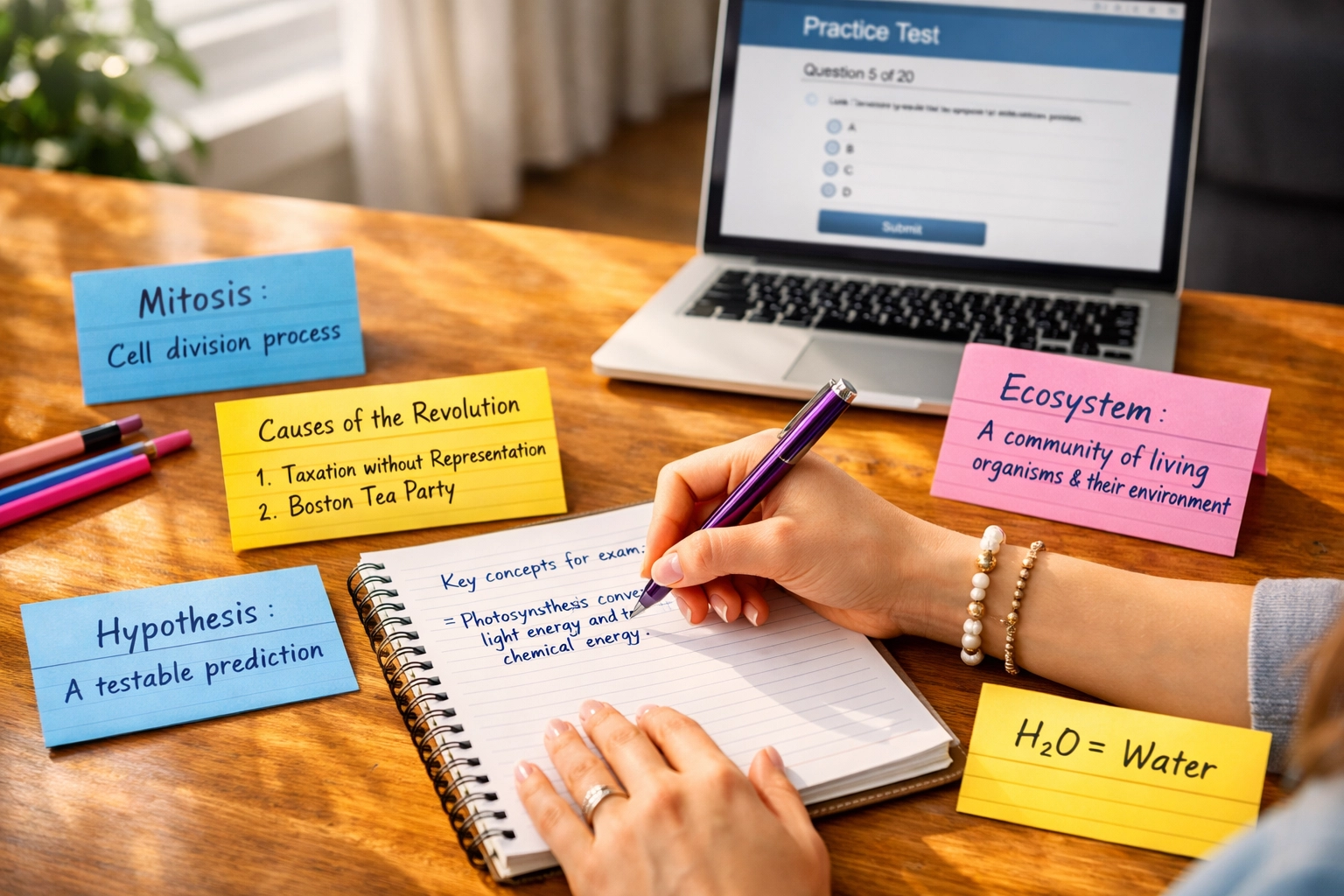
Create active learning materials instead of passive reading. Write your own study guide by hand: research shows handwriting engages kinesthetic learning and improves retention better than typing notes.
Make flashcards and review games that force you to actively use the material, not just read it.
Phase Three: Full-Length Simulation (Final Week)
Take multiple full-length practice exams under real testing conditions. Set a timer, eliminate distractions, and complete the entire test in one sitting.
The goal isn't just checking your knowledge: you're building the mental endurance to maintain focus for the full exam duration.
Apply Strategic Test-Taking Techniques During Practice
Practice exams teach you more than content: they're your laboratory for developing test-taking strategies.
Read the Complete Question
Students frequently miss correct answers by reading halfway through a question and jumping to conclusions. Train yourself during practice to read every word before looking at answer choices.
Eliminate Obviously Wrong Answers
On questions where you're uncertain, cross out choices you know are incorrect. This improves your odds on educated guesses.
Watch for Absolute Language
During practice, notice that answers containing "all," "never," or "always" are often incorrect. Answers with "generally," "seldom," or "probably" tend to be more accurate because they acknowledge exceptions.
Check Grammar Alignment
Match verb tense and grammar between the question stem and answer choices. Grammatically correct pairings are more likely to be right answers.
Practice these techniques during every practice exam so they become automatic habits by test day.
Avoid These Common Practice Mistakes
Mistake #1: Taking Practice Exams Only at the End
Don't wait until you've studied all content to take your first practice test. Early practice exams guide your study focus and prevent wasted time on topics you already know.
Mistake #2: Not Reviewing Wrong Answers
Taking a practice test without analyzing your mistakes is like going to the gym and not actually lifting weights. The learning happens during review, not during the test itself.
Spend twice as much time reviewing your practice exam as you spent taking it.
Mistake #3: Using Only One Source
Variety in practice questions exposes you to different question styles and phrasing. Use official resources as your foundation, but supplement with additional practice materials for broader exposure.
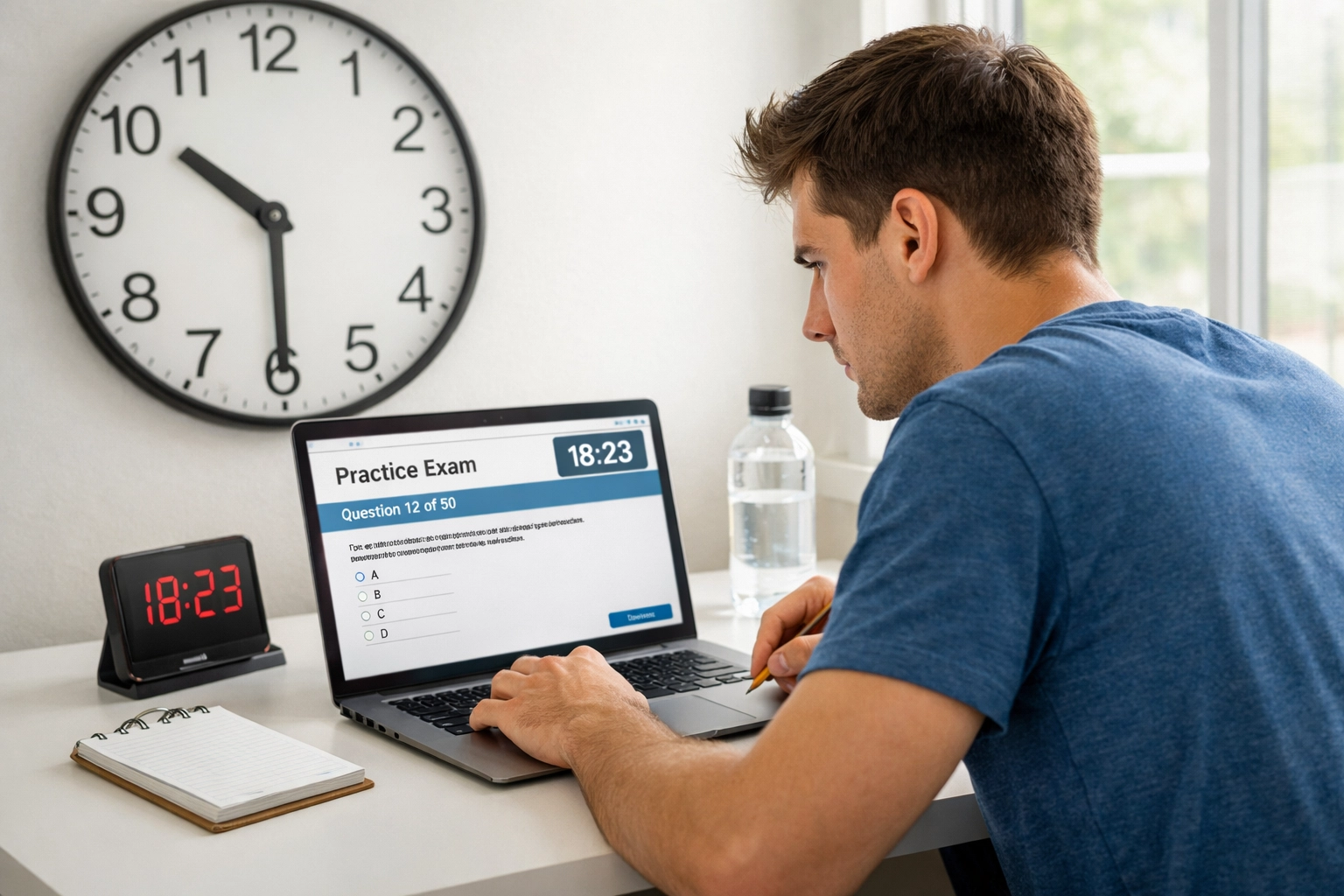
Mistake #4: Ignoring Time Management
If you take practice exams with unlimited time, you're not actually preparing for the real testing environment. Always use a timer during practice to build pacing skills.
Create Your Practice Schedule
A structured practice schedule keeps you accountable and ensures consistent progress.
Here's a simple framework that works:
Weeks 1-2: Take diagnostic practice exam, then study and practice your three weakest topic areas with chapter-specific quizzes.
Weeks 3-4: Study and practice your next three weakest areas, then take a second full-length practice exam to measure progress.
Weeks 5-6: Focus on any remaining weak spots, take a third full-length practice exam, and review all previously missed questions.
Final Week: Take one last full-length practice exam under real testing conditions, then spend remaining time reviewing your most challenging topics.
This six-week timeline provides thorough preparation without burnout. Adjust the duration based on your starting knowledge level and how many exams you're preparing for simultaneously.
Get the Practice Materials You Need
Quality practice materials make the difference between aimless studying and focused preparation.
Quick Credit Academy's $49 per month membership includes access to our complete study portal with courses and practice materials for CLEP and DSST exams. Live online group classes are available separately with class-specific pricing based on the subject you choose.
Our practice questions match the actual exam format, and our video lessons with transcripts let you learn in whatever style works best for you. Each lesson includes follow-up quizzes, and chapter tests simulate the real exam experience with 30-question assessments.
Visit Quick Credit Academy to explore our test preparation resources and start building your practice exam strategy today.
When you combine official resources, strategic practice timing, and proven test-taking techniques, you create a preparation system that targets exactly what you need to pass.
Your practice exams aren't just preparation; they're the most accurate predictor of your test-day performance. Use them strategically, and you'll pass faster in 2026.
*Quick Credit Academy membership costs $49 per month and includes access to the study portal, courses, and materials. Live online group classes are not included in the standard membership and have class-specific pricing. CLEP credit acceptance varies by institution, and results may vary based on individual preparation and testing performance.
Quick Credit Academy provides test preparation services for CLEP exams. We are not affiliated with or endorsed by the College Board. CLEP credit acceptance varies by institution. Results may vary based on individual preparation and testing performance.
Comments