
The Fastest Way to Ace Your CLEP Exam: Study Guide Secrets Revealed
- Feb 20
- 5 min read
CLEP exams can save you thousands of dollars and months of classroom time.
But here's the thing: most people waste weeks studying the wrong way. They buy every book, watch random YouTube videos, and still walk into the exam feeling unprepared.
Is this your situation?
You're juggling work, family, and other responsibilities. You don't have time to spend six months preparing for a single test. You need a strategy that works fast.
Let me show you the exact approach that gets results.
Start With a CLEP Practice Test (Seriously, Do This First)
Most people skip this step. Don't be most people.
Before you open a single CLEP study guide, take a practice test for your specific exam.
Here's why this matters:
You'll discover what you already know. No point spending hours on topics you've mastered. You'll identify your weak spots immediately. This tells you exactly where to focus your energy.
A practice test shows you the exam format, question types, and timing. You'll walk in on test day knowing what to expect.
Where do you find good CLEP practice tests? The CLEP Official Study Guide includes sample questions for every exam. You can also find practice tests through test prep resources that mirror the real testing experience.
Credit acceptance and test outcomes vary by institution and individual preparation. Always verify CLEP policies with your target college.
Take the practice test under real conditions. Set a timer. No phone. No distractions. Treat it like the actual exam.

Your CLEP Study Guide Strategy
Here's where most people get overwhelmed. They see the CLEP exams list and panic.
There are 34 different CLEP exams covering everything from College Composition to Analyzing Literature to Calculus.
You don't need to master them all. Pick the exams that match your degree requirements and your existing knowledge base.
Start with the CLEP Official Study Guide. This isn't optional. This resource tells you:
The exact percentage of questions covering each subtopic
What content appears most frequently on the exam
Which areas you can study less intensively
This means you spend 40% of your time on topics that make up 40% of the exam. Not equal time on everything.
Smart allocation saves you weeks of unnecessary studying.
Layer Your Study Resources
A single CLEP study guide won't cut it.
You need multiple tools working together. Here's what that looks like:
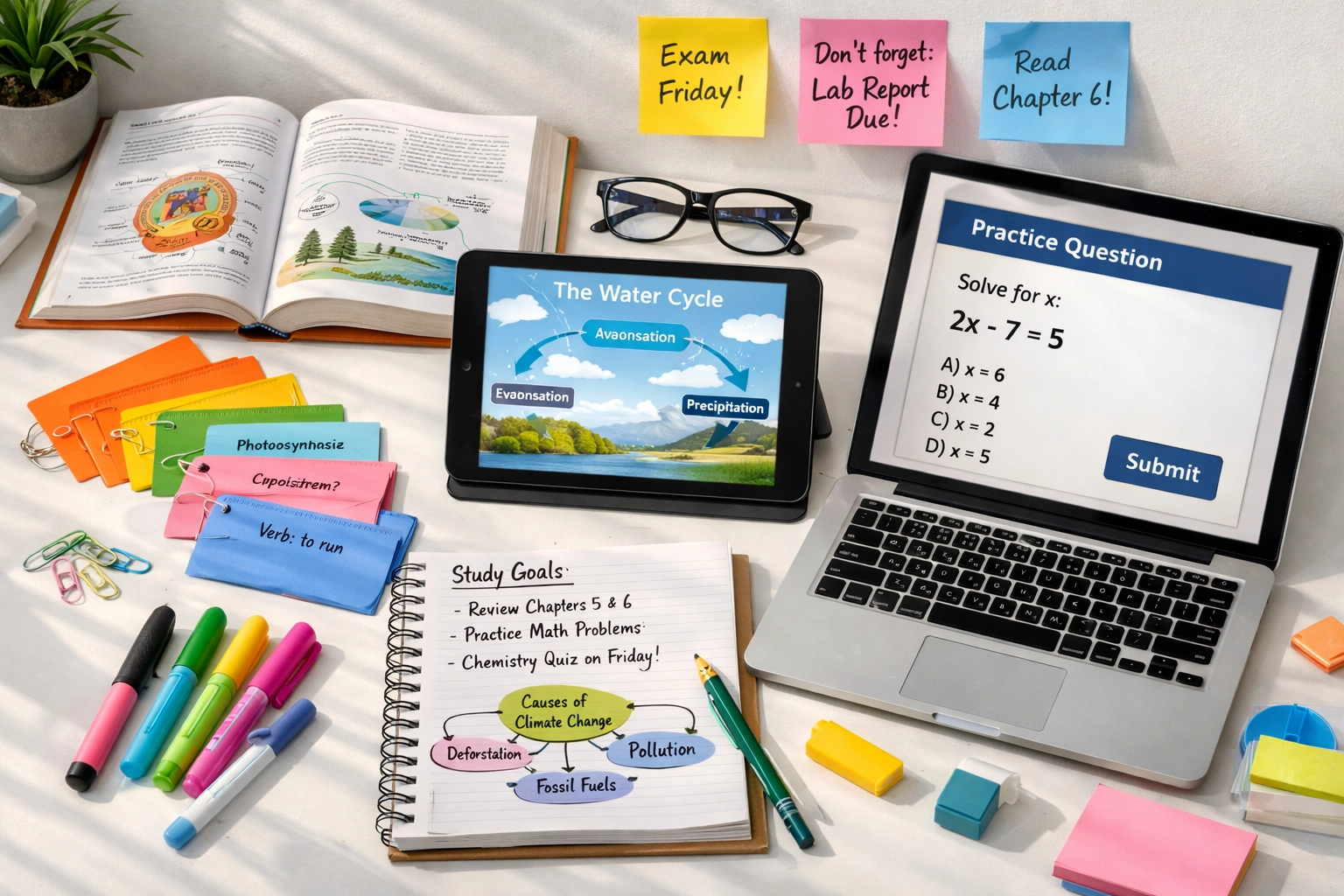
Use flashcards for quick reinforcement. Digital apps like Quizlet work great for studying during lunch breaks or commutes. Physical flashcards work better if you're a kinesthetic learner.
Watch targeted video lessons. Some concepts click better when you see them explained visually. Find videos specific to your exam topic.
Create your own study materials. Writing out practice questions and summaries by hand improves retention. Your brain processes information differently when you physically write it.
Join study groups or forums. Other test-takers share resources, tips, and moral support. You'll discover shortcuts you'd never find alone.
The key is variety. Your brain learns better when information comes from multiple sources.
The College Composition CLEP: Specific Tips
Let's get specific. The College Composition CLEP is one of the most popular exams.
This test has two parts: multiple choice questions about writing conventions and two essays.
For the multiple choice section, focus on:
Grammar rules (subject-verb agreement, pronoun usage, modifiers)
Sentence structure and clarity
Rhetorical strategies and organization
Citation formats and research skills
For the essays, practice timed writing. You'll write one argumentative essay and one analyzing a source.
Set a timer for 30 minutes. Pick a random prompt. Write.
Do this at least five times before test day. You'll develop a rhythm and template that works.
The Analyzing and Interpreting Literature CLEP: What to Study
The Analyzing Literature exam covers poetry, drama, fiction, and nonfiction from various time periods.
You don't need to memorize every literary work ever written. You need to understand:
Literary terms and devices (metaphor, symbolism, irony, tone)
How to analyze themes and character development
Different literary movements and periods
Close reading skills
Read actively. Practice analyzing short poems and prose passages. Ask yourself: What's the author's purpose? What literary devices create meaning? How does form support content?
This exam tests your analytical skills more than your memorization. You'll see passages you've never read before. That's the point.

Practice Under Real Testing Conditions
Here's where you build speed and confidence.
Take full-length practice tests regularly. Not just practice questions. Full tests.
Time yourself strictly. The real CLEP exam won't wait while you daydream.
This approach does two things:
First, it builds your test-taking stamina. Ninety minutes of focused concentration is exhausting if you're not used to it.
Second, it reduces test anxiety. The exam feels familiar on test day because you've done it before.
Important strategy: there's no penalty for wrong answers on CLEP exams.
This changes everything.
If you're stuck on a question, skip it. Answer the questions you know first. Come back to the difficult ones later.
Never leave a question blank. If you're out of time, guess. You might get it right.
Test Day Execution Strategies
You've studied. You've practiced. Now it's test day.
Arrive early. Bring your ID and confirmation number. Get settled before the clock starts.
Read each question completely before answering. This sounds obvious, but test anxiety makes people rush.
Look for trap answers. Eliminate options with absolute words like "always," "never," or "must." Real-world scenarios rarely deal in absolutes.
If two answers seem correct, go with your first instinct. Research shows your initial choice is usually right.
Manage your time actively. If the exam has 100 questions and 90 minutes, that's roughly 54 seconds per question. Check your progress at the 30-minute and 60-minute marks.
Your Complete CLEP Exams List Strategy
The full CLEP exams list includes 34 different tests across five categories:
Composition and Literature
World Languages
History and Social Sciences
Science and Mathematics
Business
Start with exams that match your existing knowledge. If you read constantly, tackle the literature exams. If you're bilingual, take the language exams.
Work your way through 2-3 exams at a time. This focused approach prevents burnout and keeps your studying efficient.
Many students earn 30+ credits in a single year using this strategy. That's a full year of college completed through testing.
Get Expert Support
Studying alone works for some people. But most busy adults need structure and accountability.
That's where expert guidance makes the difference.
At Quick Credit Academy, we provide targeted CLEP study guides, practice tests, and preparation strategies for every exam. Our approach focuses on efficient studying that fits your schedule.
Whether you're tackling College Composition, Analyzing Literature, or any other CLEP exam, having a clear roadmap and expert support can significantly reduce your preparation time.
Explore our CLEP test prep resources to see how we help busy adults earn college credit faster.
Your Next Steps
Pick your first CLEP exam today. Download a practice test. Schedule your study time.
You don't need months of preparation. You need a focused strategy and consistent effort.
Start with one exam. Pass it. Build momentum.
The fastest way to ace your CLEP exam isn't a secret. It's a system. Assessment, strategic studying, practice, and execution.
You've got this.
Quick Credit Academy provides test preparation services for CLEP exams. We are not affiliated with or endorsed by the College Board. CLEP credit acceptance varies by institution. Results may vary based on individual preparation and testing performance.
Comments