
The Big Question: Do Colleges Actually Accept CLEP Credits in 2026?
- Feb 23
- 4 min read
You're thinking about taking CLEP exams to speed up your degree.
But here's the question keeping you up at night: Will your college actually accept the credits?
Let's clear this up right now.
The Short Answer: Yes, But...
Here's the good news: Over 2,900 colleges and universities in the United States currently accept CLEP credits. That's a pretty solid number.
But (and this is important) acceptance varies by institution. Each college sets its own policy about which exams they accept, what scores they require, and how many credits you can earn.
Quick Credit Academy provides test preparation services and educational guidance for CLEP exams. CLEP credit acceptance is determined by individual institutions. Results may vary based on college policy, exam performance, and individual preparation.

What Does "Acceptance" Actually Mean?
When we say a college "accepts" CLEP credits, here's what typically happens:
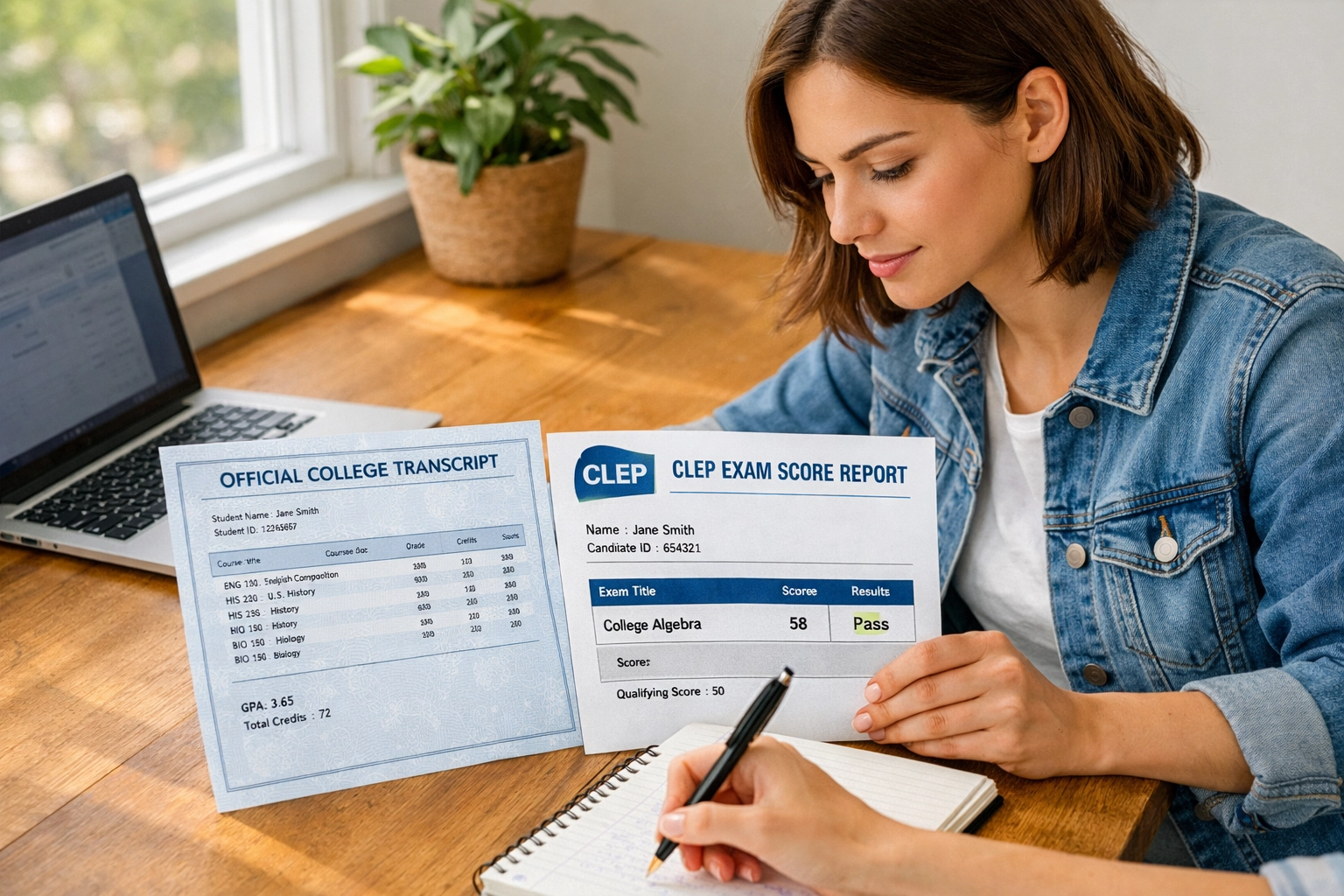
You pass a CLEP exam. The college reviews your official score report. If you meet their minimum score requirement (usually 50), they award you college credit for that subject.
Most colleges award a minimum of 3 semester hours per CLEP exam passed. Some exams can give you more.
The credits show up on your transcript with a grade of "Pass" or "Credit." They don't affect your GPA. You just get the credit and move forward.
Pretty straightforward, right?
The Catch: Every College Makes Its Own Rules
Here's where it gets interesting.
College A might accept your Biology CLEP exam with a score of 50. College B might require a 55. College C might not accept that exam at all.
Some colleges put a cap on how many CLEP credits you can apply toward your degree. For example, you might be limited to 30 units total from all credit-by-examination sources combined.
Other schools have specific timing requirements. They might only process CLEP credits during certain semesters, or require you to be enrolled in a minimum number of units.
The University of California Situation
If you're planning to attend a UC school, listen up.
The University of California system does not accept CLEP credits. Not at UCLA. Not at UC Berkeley. Not at any UC campus.
Community colleges and California State Universities do accept CLEP. But if you're planning to transfer to a UC school, those CLEP credits won't transfer with you.
This is crucial information if you're planning your prep journey.
What About Major-Specific Courses?
Here's another layer to consider.
Many colleges accept CLEP credits for general education requirements. English Composition, College Math, History, these typically work great.
But when it comes to courses in your major? That's where things get trickier.
Individual departments often have higher standards. They might require a higher score. They might not accept CLEP at all for major courses. They want to see you take their department's classes.
Always check with the specific department if you're hoping to use CLEP credits toward your major requirements.

How to Verify Before You Test
Don't guess. Don't assume. Verify.
Here's your action plan:
Step 1: Visit the College Board's CLEP College Credit Policy Search tool. Search for your college. Review their posted policy.
Step 2: Contact your college's registrar office or credit evaluation office directly. Ask these specific questions:
Which CLEP exams do you accept?
What minimum scores do you require?
How many total CLEP credits can I apply toward my degree?
Can CLEP credits count toward my major requirements?
When do you process CLEP credit petitions?
Step 3: Get it in writing. Email is perfect. You want documentation of what they tell you.
Step 4: If you're planning to transfer, check with your target transfer institution too. CLEP credits accepted at your current school might not transfer the same way to your next school.
This homework takes maybe an hour. It can save you hundreds of dollars and countless hours of wasted effort.
The Transfer Student Reality
Let's talk about transfer students specifically.
You earn CLEP credits at a community college. You transfer to a four-year university. Now what?
The four-year school reviews all your credits, including CLEP. They decide what transfers and what doesn't.
They might accept your CLEP credits fully. They might accept them partially. They might not accept them at all.
This is why you need to check with both schools. Your community college's acceptance policy doesn't guarantee your transfer school will honor those credits.

General Education vs. Transfer Requirements
Here's a common confusion point.
CLEP credits might satisfy general education requirements at your current college. But they might not satisfy transfer requirements for students moving between California colleges.
For example, CLEP credits cannot be applied toward Cal-GETC (California General Education-Breadth Transfer Curriculum) requirements.
Know which requirements you're trying to fulfill. Then verify CLEP will work for that specific purpose.
Making CLEP Work for You
CLEP can absolutely save you time and money. Thousands of students use it successfully every year.
The key is doing your research upfront. Know your college's policy before you register for an exam. Understand the score you need. Confirm the credits will count the way you expect.
Then prepare properly for the exam. A passing score at your target college might be 50. But if you study properly, you can score much higher and feel confident on test day.
Quick Credit Academy offers test preparation support, study courses, and Prep Guidance to help you prepare effectively for CLEP exams. Our $49/month membership includes access to our study portal, courses, and materials designed specifically for CLEP test prep. Live online group classes are available separately with class-specific pricing.

Your Next Steps
Start by identifying which colleges you're considering. Look up their CLEP policies using the College Board's search tool.
Make a list of questions. Contact each school's registrar or credit evaluation office. Get clear answers about their requirements.
Once you know which exams will work for your situation, create a study plan. Most students need 4-8 weeks of focused preparation for each CLEP exam.
Want help preparing for your CLEP exams? Check out our CLEP test prep resources to get started with structured study materials and Prep Guidance from our Learning Specialists, and connect with your school's college credit department for official policy questions.
The bottom line? Yes, colleges accept CLEP credits. Over 2,900 of them do. But you need to verify your specific college's policy before you invest your time and money.
Do that homework first. Then test with confidence.
Quick Credit Academy provides test preparation services for CLEP exams. We are not affiliated with or endorsed by the College Board. CLEP credit acceptance varies by institution. Results may vary based on individual preparation and testing performance.
Comments