
How to Bypass College Courses in 3 Months: The CLEP and DSST Guide for Working Adults
- Feb 20
- 5 min read
You're working full-time, juggling family responsibilities, and trying to finish that degree you started years ago. Traditional college courses demand 16 weeks of your time per class, plus homework, projects, and midterms.
There's a faster way. CLEP and DSST exams let you prove what you already know and earn college credit in a fraction of the time.
What Are CLEP and DSST Exams?
CLEP (College Level Examination Program) and DSST exams are credit-by-exam programs that let you test out of college courses. Instead of sitting through months of lectures, you take a single exam that typically lasts 90 minutes.
Pass the test, and you earn the same college credit as someone who spent an entire semester in that class.
Here's the difference between the two:
CLEP offers 34 exams covering general education subjects like College Composition, American Government, and Introductory Psychology. These are the core courses most undergraduate degrees require.
DSST provides 37+ exams focusing on more specialized topics like Cybersecurity, Business Ethics, and Lifespan Developmental Psychology. Originally designed for military members, DSST works great for adult learners with work experience.
Quick Credit Academy provides test preparation services for CLEP exams. Credit acceptance varies by institution, and results may vary based on individual preparation and testing performance.

Why This Works for Working Adults
You don't need to quit your job or rearrange your schedule around class times. You study when you can: early mornings, lunch breaks, or after the kids go to bed.
The cost difference is huge. A traditional 3-credit college course runs $1,500-$3,000 at most universities. A CLEP or DSST exam costs $89-$120. You save thousands per exam.
The timeline advantage matters even more. Traditional courses take 16 weeks. With focused preparation, you can be ready to test in 4-8 weeks per exam.
Your 3-Month Game Plan
Let's break down how to tackle this realistically. The key isn't cramming everything into 90 days: it's being strategic about which exams you take and how you prepare.
Month 1: Pick Your Exams and Build Your Foundation
Start by checking with your college which CLEP and DSST exams they accept. Most schools list this information on their website, or you can call their registrar's office.
Choose 2-3 exams that align with your degree requirements. Focus on subjects where you already have some knowledge from work or life experience.
Good starter exams for working adults:
Principles of Management (if you've supervised anyone)
Introductory Business Law (if you've dealt with contracts)
Principles of Marketing (if you've worked in sales or marketing)
American Government (general knowledge most adults have)
Download the free exam fact sheets from the College Board (for CLEP) or Prometric (for DSST). These PDFs show exactly what's on each test.
Month 2: Deep Study Phase
This is where you dig into the actual content. Dedicate 1-2 hours daily to studying. Break your study sessions into focused chunks.
Use a mix of resources:
Official study guides ($25-30 for CLEP)
Free practice tests through Prometric for DSST
Video lessons and interactive content
Flashcards for quick review sessions

Focus on understanding concepts, not memorizing. The exams test your ability to apply knowledge, not just recall facts.
Schedule your first exam for the end of Month 2 if you're feeling confident. If not, that's fine: use the extra time.
Month 3: Practice Tests and Exam Day
Take full-length practice tests under real exam conditions. Set a timer and eliminate distractions.
Review every question you miss. Understanding why an answer is wrong is just as important as knowing the right answer.
Schedule your remaining exams 2-3 weeks apart. This gives you time to study for the next one while the previous material is still fresh.
Study Tips That Actually Work When You're Busy
Use your commute. Audio lessons or flashcard apps work great on the train or in traffic.
Study the same time every day. Your brain adapts to the routine, and you're less likely to skip sessions.
Join a study group. Other working adults get your schedule challenges. Online study groups meet in the evening when you're actually available.
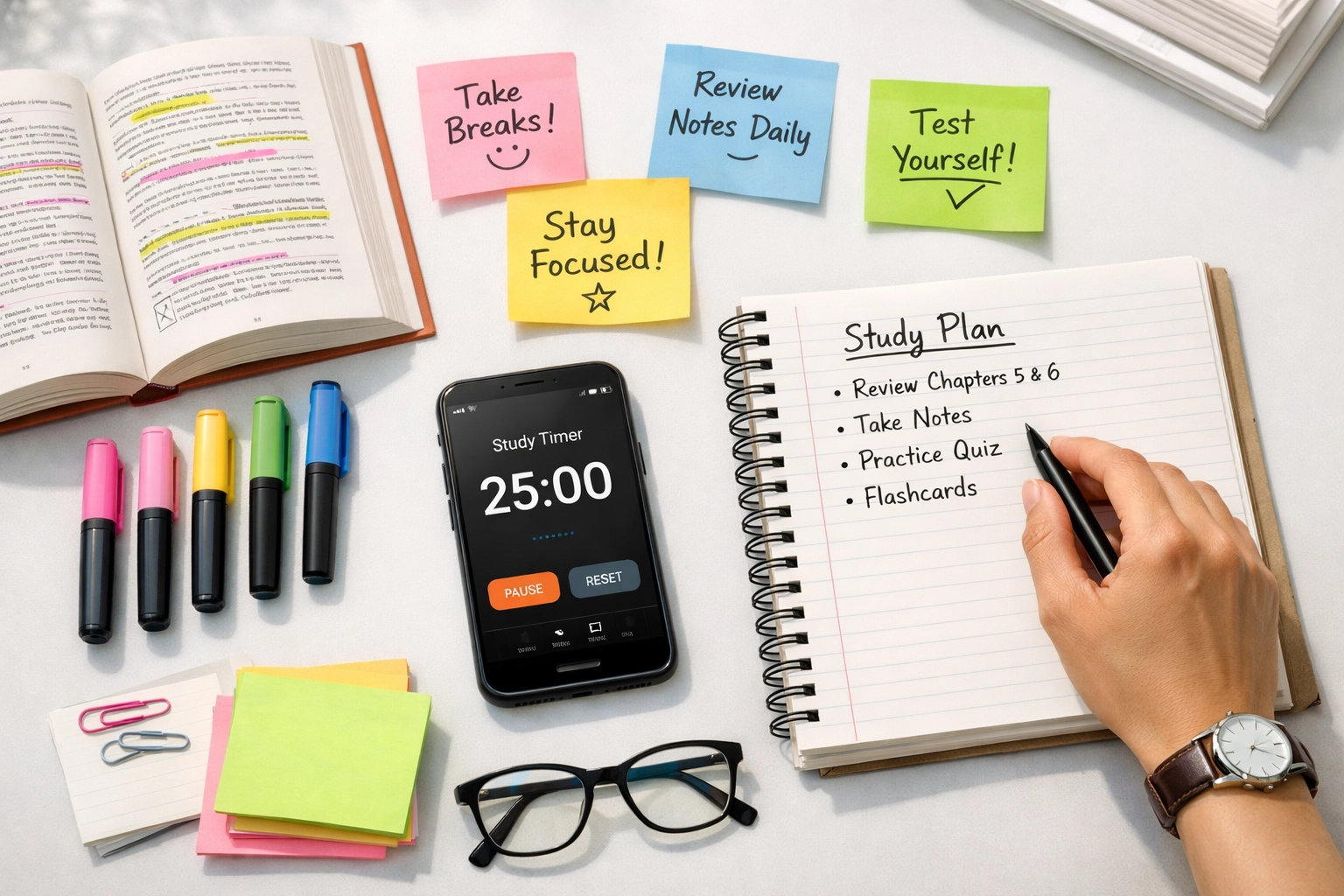
Take breaks. Your brain retains information better with 25-minute study sessions and 5-minute breaks than marathon cram sessions.
Resources at Quick Credit Academy
Quick Credit Academy offers structured test prep specifically designed for working adults. The membership gives you access to study materials, practice tests, and courses for both CLEP and DSST exams.
Membership costs $49 per month and includes:
Access to the study portal
Course materials for all available exams
Practice tests and quizzes
Study schedules you can adjust around work
Live online group classes are available separately with pricing that varies by class. If you need extra help with tough concepts, tutoring services are also available.
Common Mistakes to Avoid
Don't take too many exams at once. Even if you're motivated, spreading yourself thin across multiple subjects usually means failing multiple exams. Stick to 1-2 exams per month.
Don't skip the practice tests. They show you what to expect and reveal gaps in your knowledge. Take at least two full practice tests before scheduling your real exam.
Don't assume work experience equals passing. You might know management principles from your job, but the exam tests specific theories and terminology. Study the academic content.
Don't ignore the format. CLEP exams use only multiple choice questions. Some DSST exams include essay questions. Know what you're walking into.

Making It Real: Your Next Steps
Pick one exam to start with. Just one. Download the free fact sheet today and read through the content outline.
Block out 30 minutes tomorrow to map out your study schedule for the next month. Be realistic about your time. Better to study one hour daily than plan for three hours you'll never find.
Register for your exam 4-6 weeks out. Having a date on the calendar creates accountability.
If you want a structured approach with all the materials in one place, check out the courses at Quick Credit Academy. Everything's designed for people who study in stolen moments between work and life.
The Bottom Line
Three months from now, you could have 6-9 college credits completed. That's 2-3 traditional courses you'll never have to sit through.
You already know more than you think. You've learned through work, reading, and life experience. CLEP and DSST exams let you prove that knowledge and get credit for it.
Start with one exam. See how it goes. Most working adults who pass their first exam get hooked on this approach. It's faster, cheaper, and way more flexible than traditional classes.
The only question is which exam you'll tackle first.
Need help getting started? Visit Quick Credit Academy to explore test prep options that fit your schedule, or contact us with questions about which exams make sense for your situation.
Quick Credit Academy provides test preparation services for CLEP exams. We are not affiliated with or endorsed by the College Board. CLEP credit acceptance varies by institution. Results may vary based on individual preparation and testing performance.
Comments