
CLEP Practice Test Secrets Revealed: What Experts Don't Want You to Know
- Feb 22
- 5 min read
You're scrolling through CLEP prep advice online and seeing the same recycled tips over and over. "Study hard." "Take practice tests." "Review the material."
Thanks for nothing, right?
Here's what most test prep advice won't tell you: CLEP practice tests aren't just study tools: they're the blueprint to the actual exam. And when you know how to use them strategically, you can save yourself hundreds of hours and thousands of dollars in college tuition.
Let me share what actually works.
The 70% Rule Nobody Talks About
Most people obsess over scoring perfectly on practice tests. They retake the same test until they get 100%, thinking that's what it takes to pass.
That's a waste of time.
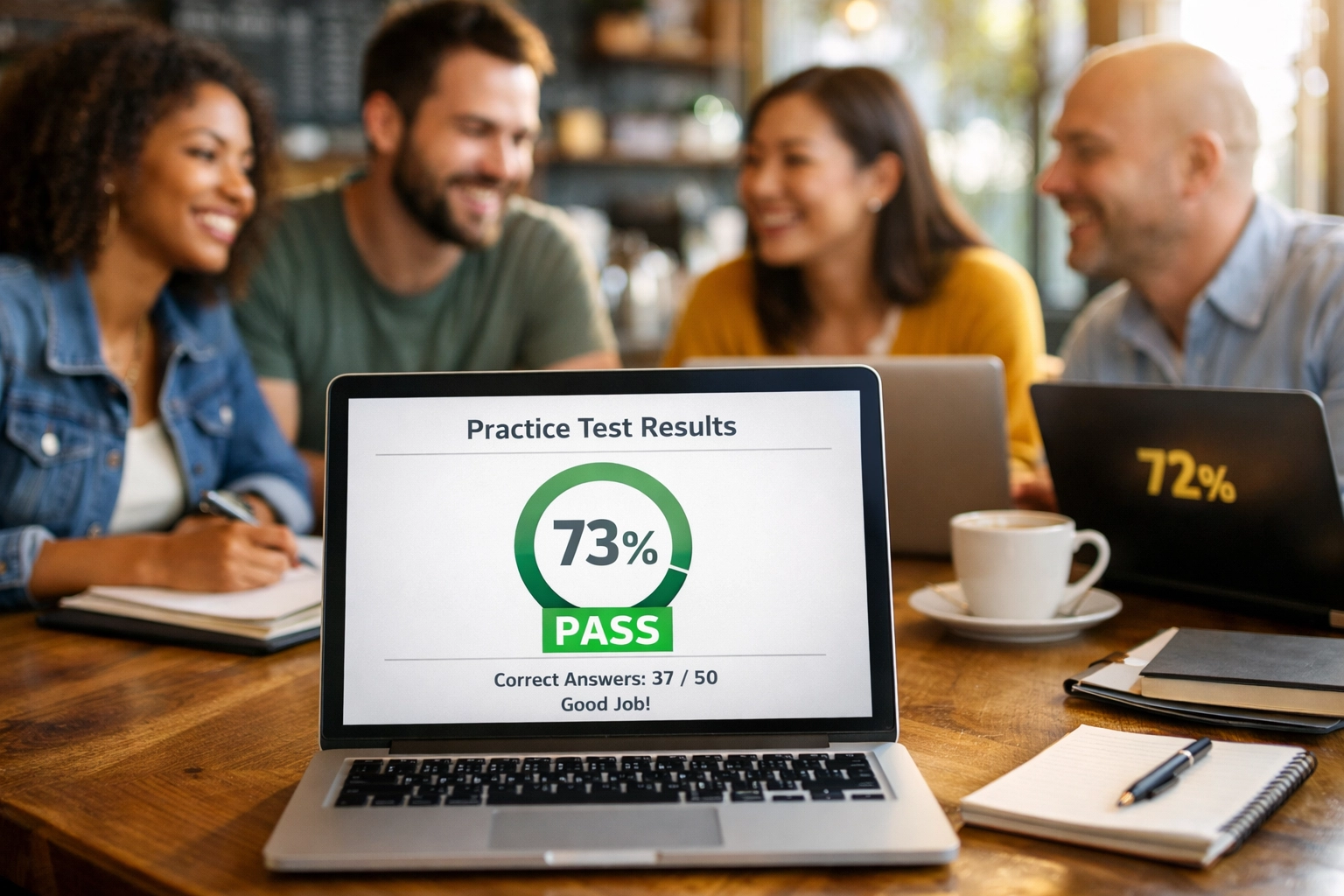
Here's the reality: You can miss nearly half the questions on a CLEP exam and still pass. The actual benchmark you should aim for is scoring consistently above 70% on practice tests. Once you hit that threshold across multiple practice attempts, you're ready to schedule your exam.
Results may vary based on individual preparation and testing performance, and CLEP credit acceptance varies by institution.
This changes everything. Instead of burning weeks trying to master every detail, you focus on getting comfortable with the test format and understanding the core concepts well enough to answer most questions correctly.
Official Resources vs. Third-Party Prep: What You Actually Need
Walk into any bookstore and you'll find dozens of CLEP prep books. The question is: which ones actually mirror what you'll see on test day?
The Official College Board Study Guide is your starting point. It contains practice tests for all 33 CLEP exams and gets updated annually. The catch? It's only available in print, so you're not experiencing the computer-based format of the actual exam.
That's where online practice platforms become essential. They simulate the real testing environment: timed questions, computer navigation, automatic grading, and detailed feedback on your weak areas. You're not just learning content; you're training your brain to work within the actual test conditions.
The Answer Elimination Strategy That Actually Works
Here's a technique that test prep companies charge big money to teach, but it's simple once you understand it.
CLEP test writers intentionally include "clever-sounding distractors": wrong answers that seem plausible if you're not careful. These aren't random wrong answers. They're designed to trap test-takers who have partial knowledge but haven't fully grasped the concept.
When you're facing a tough question, don't hunt for the right answer immediately. Instead:
Group answers into families - Notice which answers are similar to each other
Eliminate obvious wrong answers first - Get rid of anything you know is incorrect
Look for extreme language - Words like "always," "never," or "only" are often red flags
Compare remaining choices side-by-side - What's the key difference between them?
This systematic approach helps you make educated guesses rather than random ones. And since there's no penalty for wrong answers on CLEP exams, you should answer every single question: even if you're guessing.

Understanding Test Structure Changes Everything
Most people dive straight into studying content without understanding what they're actually being tested on.
Every CLEP exam has a detailed description from the College Board that breaks down:
Which topics are covered
What percentage of the test each topic represents
The types of questions you'll encounter
Sample questions and correct answers
Spend 20 minutes reading this before you start studying. If a topic only represents 5% of the exam, don't spend 50% of your study time on it. Focus your energy where it actually counts.
The Practice Test Progression That Builds Confidence
Here's how most people use practice tests wrong: They take one, score poorly, panic, and spend weeks reviewing everything before trying another one.
Better approach:
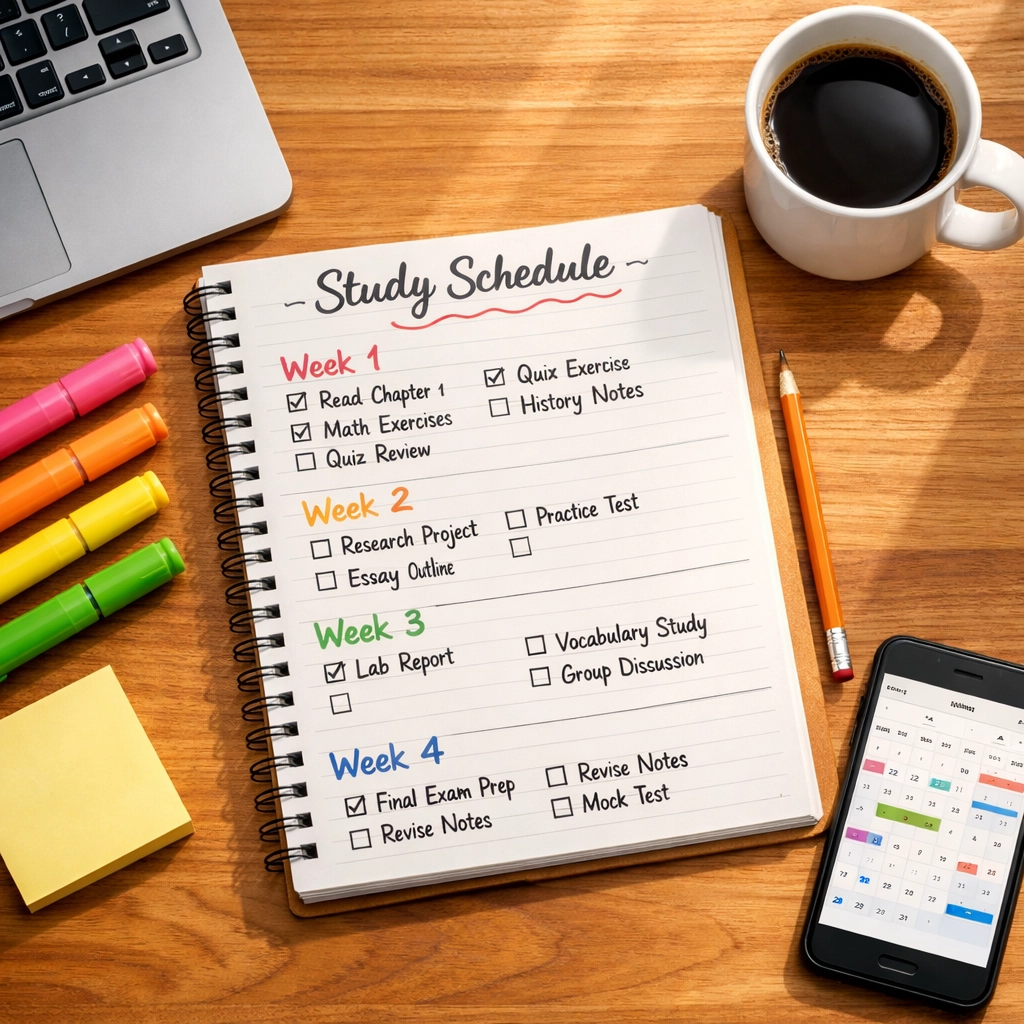
Week 1: Take a diagnostic practice test with zero prep. Don't worry about the score: you're just identifying where you stand and which topics need work.
Weeks 2-4: Study your weak areas using targeted resources. Don't try to memorize everything. Focus on understanding concepts well enough to apply them.
Week 5: Take your second practice test. You should see improvement, but you might still have gaps.
Week 6: Address remaining weak spots with focused review.
Week 7: Take a final practice test. If you're consistently scoring above 70%, schedule your exam.
This progression builds genuine knowledge while tracking your readiness objectively. No guesswork about whether you're ready: the numbers tell you.
Strategic Guessing vs. Random Guessing
When you don't know an answer, the way you guess matters.
Random guessing: Picking whatever "feels" right or choosing "C" because it "seems like it's right more often."
Strategic guessing: Using partial knowledge, context clues, and elimination to make an informed choice.
Let's say you're facing a history question about the New Deal, and you're not sure of the exact answer. But you know it happened during the Great Depression in the 1930s. That knowledge lets you eliminate answers that reference earlier or later time periods, immediately improving your odds.
This is why taking multiple practice tests matters. You start recognizing patterns in how questions are structured and learn to extract hints from the question itself.
Time Management Nobody Teaches You
CLEP exams are timed, but most people don't practice under time pressure until test day. That's a mistake.
Here's what works:
Take your first practice test untimed. Just answer the questions and see how long it naturally takes you. This establishes your baseline.
For your second practice test, set a timer for the actual exam duration. Don't panic if you don't finish: note where you ran out of time.
For subsequent practice tests, aim to finish with 5-10 minutes remaining. This buffer gives you time to review flagged questions without rushing at the end.
Most importantly: If you're stuck on a question during practice, flag it and move on. Come back if you have time. Never let one tough question derail your momentum on questions you can answer confidently.
How Quick Credit Academy Makes This Easier
Look, you could piece together all these strategies on your own. But that takes time most working adults and parents don't have.
Quick Credit Academy's $49 monthly membership gives you access to comprehensive study materials, practice resources, and Test Prep Guidance from experienced Learning Specialists who've helped thousands of students pass CLEP exams.
Instead of spending $1,000+ per course at traditional colleges, you pay $49/month for test prep that helps you earn the same college credits. Over 2,900 colleges accept CLEP credits, giving you the flexibility to study on your schedule: whether that's early morning before work or late night after the kids are asleep.
The membership includes access to the study portal with courses and materials. Need additional support? Live online classes and tutoring are available separately with class-specific pricing.
Your Next Step
You now know the strategies that actually work for CLEP practice tests. The question is: what's your timeline?
If you're serious about fast-tracking your degree while saving money, start with one exam. Pick a subject you're already familiar with, apply these practice test strategies, and prove to yourself that this works.
Then repeat the process for your next exam.
Every CLEP exam you pass is 3-6 credits you didn't have to sit in a classroom for. That's time back with your family. That's money in your pocket. That's progress toward your degree on your terms.
Learn more about our CLEP test prep resources and see how Quick Credit Academy can help you save time and money on your college degree.
Quick Credit Academy provides test preparation services for CLEP exams. We are not affiliated with or endorsed by the College Board. CLEP credit acceptance varies by institution. Results may vary based on individual preparation and testing performance.
Comments