
7 Mistakes You're Making with CLEP Study Guides (and How to Fix Them)
- Feb 21
- 5 min read
You bought a CLEP study guide. You're ready to earn college credit and save thousands of dollars.
But here's the problem: most people use study guides all wrong. They pick up a book, read through it once, and wonder why they don't pass.
If you want to actually earn those credits (which may be accepted by your college where applicable), you need to fix these common mistakes. Let's walk through each one and get you on track.
Mistake 1: Studying Content That Doesn't Match the Exam
Here's what happens: You see a textbook titled "Introduction to Sociology" and assume it covers everything on the CLEP Sociology exam.
Wrong.
College textbooks and CLEP exams don't always align. That textbook might spend three chapters on topics that make up only 5% of your exam. Meanwhile, you're missing entire sections that actually get tested.
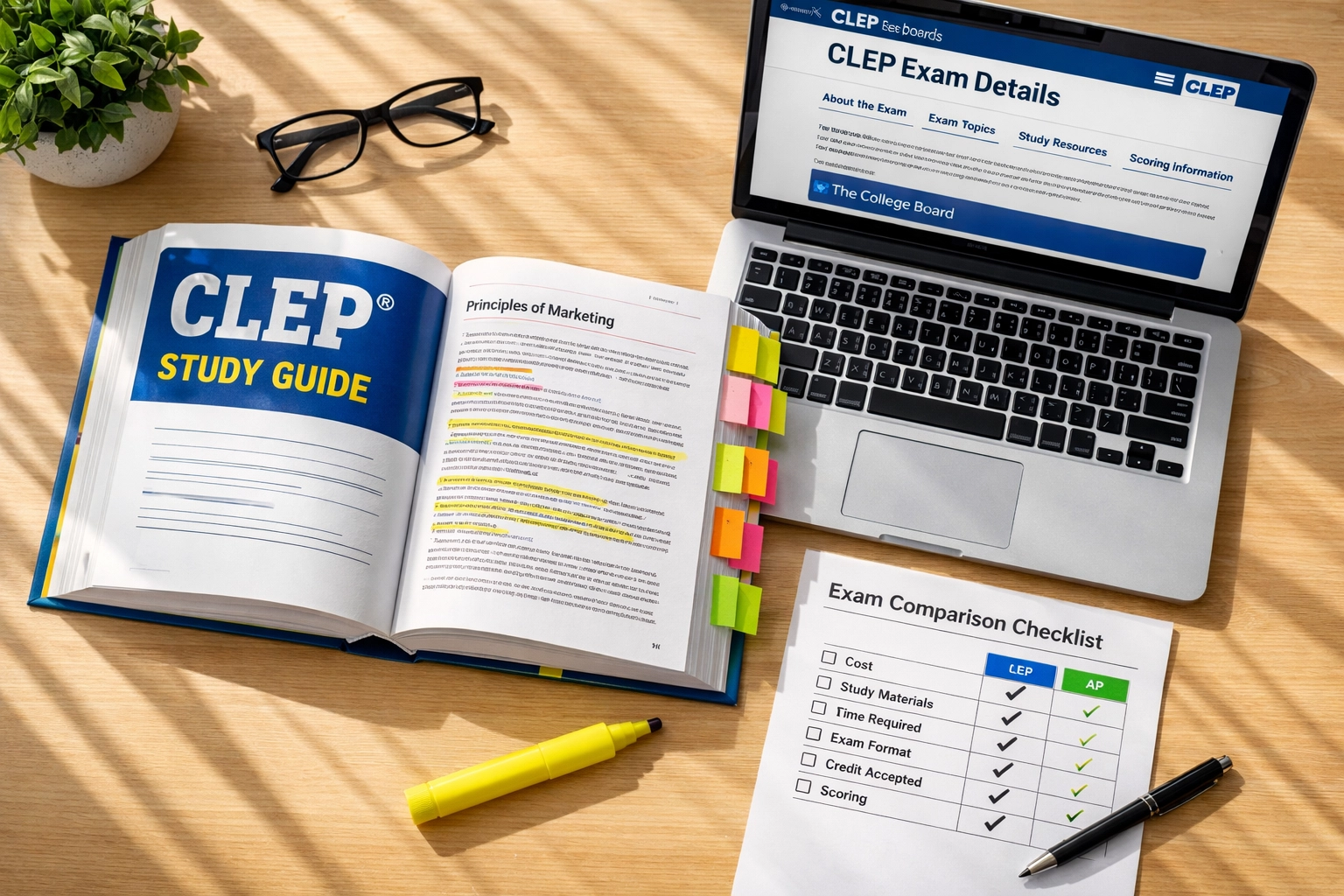
The fix: Go straight to the College Board website and find the official exam breakdown for your specific CLEP test. Look under "Exam Details" for your subject.
Compare what's listed there to your study guide's table of contents. If major topics are missing from your guide, you need additional resources.
This simple check saves you from wasting weeks studying the wrong material.
Mistake 2: Relying on Only One Study Resource
One study guide feels manageable. You think: "I'll just work through this book and I'm good."
Not quite.
Every study guide has gaps. Some skip topics. Others explain concepts in ways that just don't click with your learning style. When you rely on a single resource, you're setting yourself up for knowledge gaps that will hurt you on test day.
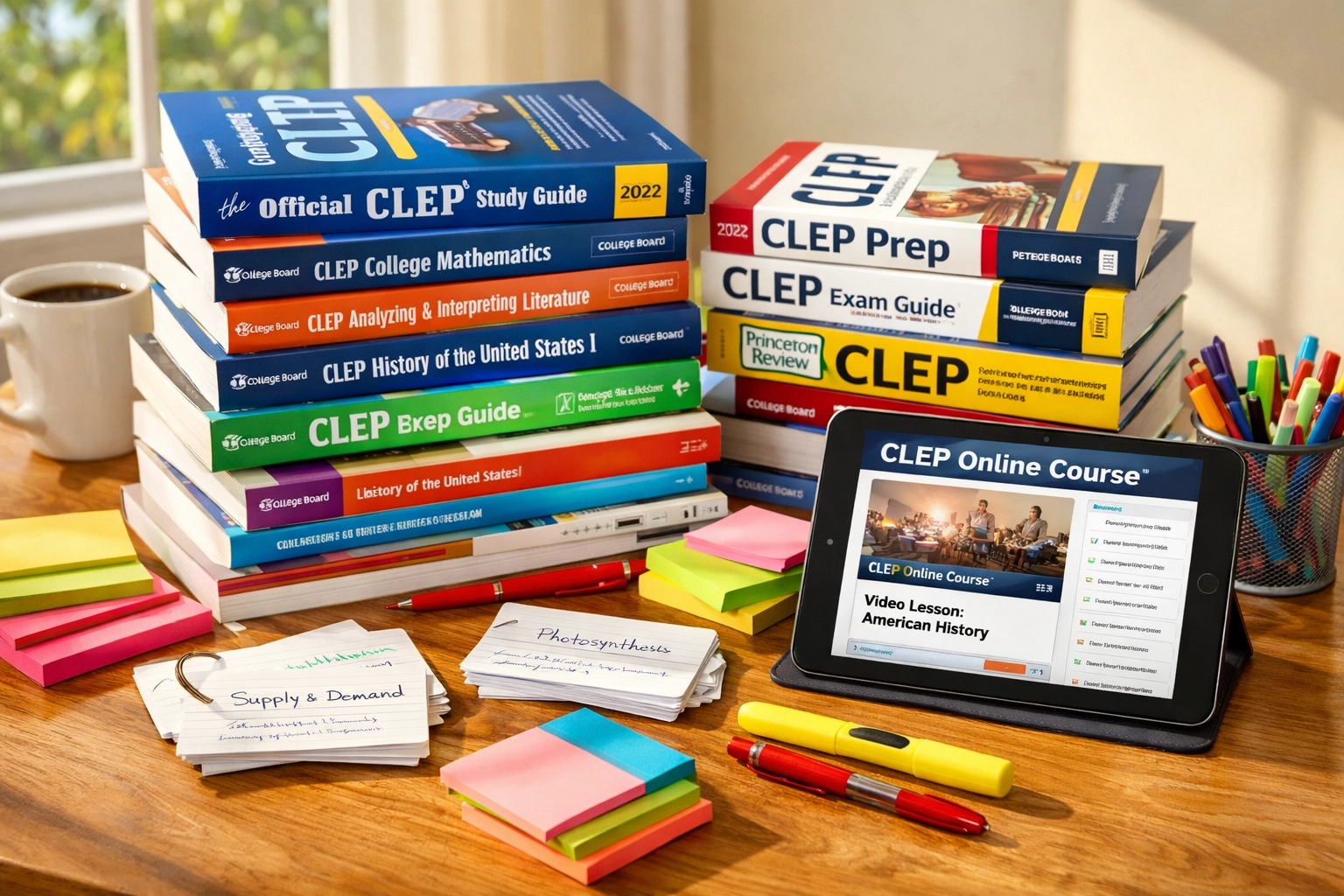
The fix: Stack multiple resources together. Use the official CLEP materials as your foundation. Then add a third-party study guide that works for your learning style.
Mix in online courses, video tutorials, and practice questions from different sources. This approach keeps you engaged and fills in those gaps.
You don't need to complete every resource cover-to-cover. Use them strategically to strengthen weak areas.
Mistake 3: Skipping the Official College Board Materials
You might think third-party study guides are "better" or "easier to understand" than the official materials.
That's a costly assumption.
The College Board creates the actual CLEP exams. Their official study guides tell you exactly what's tested and how questions are formatted. They even show you the percentage breakdown for each topic area.
The fix: Start with the Official CLEP Study Guide from the College Board for your subject. Read the exam overview section carefully.
Pay special attention to the content breakdown percentages. If 25% of your exam covers a specific subtopic, spend 25% of your study time on it.
This strategic allocation helps you focus where it actually matters. You're not guessing what to study, you're following the blueprint.
Mistake 4: Waiting Too Long to Take Practice Tests
Most people save practice tests for the end of their preparation. They want to feel "ready" first.
Bad idea.
When you wait, you miss the most valuable diagnostic tool available. You don't know what you actually need to study until you test yourself.
The fix: Take a practice test within your first few days of studying. Yes, before you feel prepared.
This baseline assessment shows you exactly where you stand. You'll quickly identify which topics you already know and which ones need serious work.
Keep taking practice tests throughout your preparation: not just at the end. Each test reveals knowledge gaps you didn't know existed.
Aim for consistently scoring 90% or higher on practice tests before scheduling your actual exam. Results may vary based on individual preparation, but this benchmark indicates you're ready to test.
Mistake 5: Passive Reading Instead of Active Learning
You're sitting with your study guide, reading page after page. Your eyes move across the words. You reach the end of a chapter.
Then you realize you can't remember what you just read.
Passive reading doesn't work for CLEP preparation. Your brain needs active engagement to retain information.
The fix: Put down the highlighter and pick up a pen. Take actual notes as you read: handwritten, not typed.
The physical act of writing engages your brain differently. You process information more deeply when your hand moves across paper.
Create your own flashcards for key concepts. Answer the practice questions in your study guide instead of just reading them. Summarize each section in your own words.
Turn reading time into active learning time. Your retention will skyrocket.

Mistake 6: Ignoring the Exam Outline and Content Breakdown
You dive straight into Chapter 1 of your study guide without checking what's actually on the exam.
This is like packing for a trip without checking the weather. You might bring everything except what you actually need.
The CLEP exam outline tells you exactly which topics appear on your test and how much each topic matters. Without this information, you're studying blind.
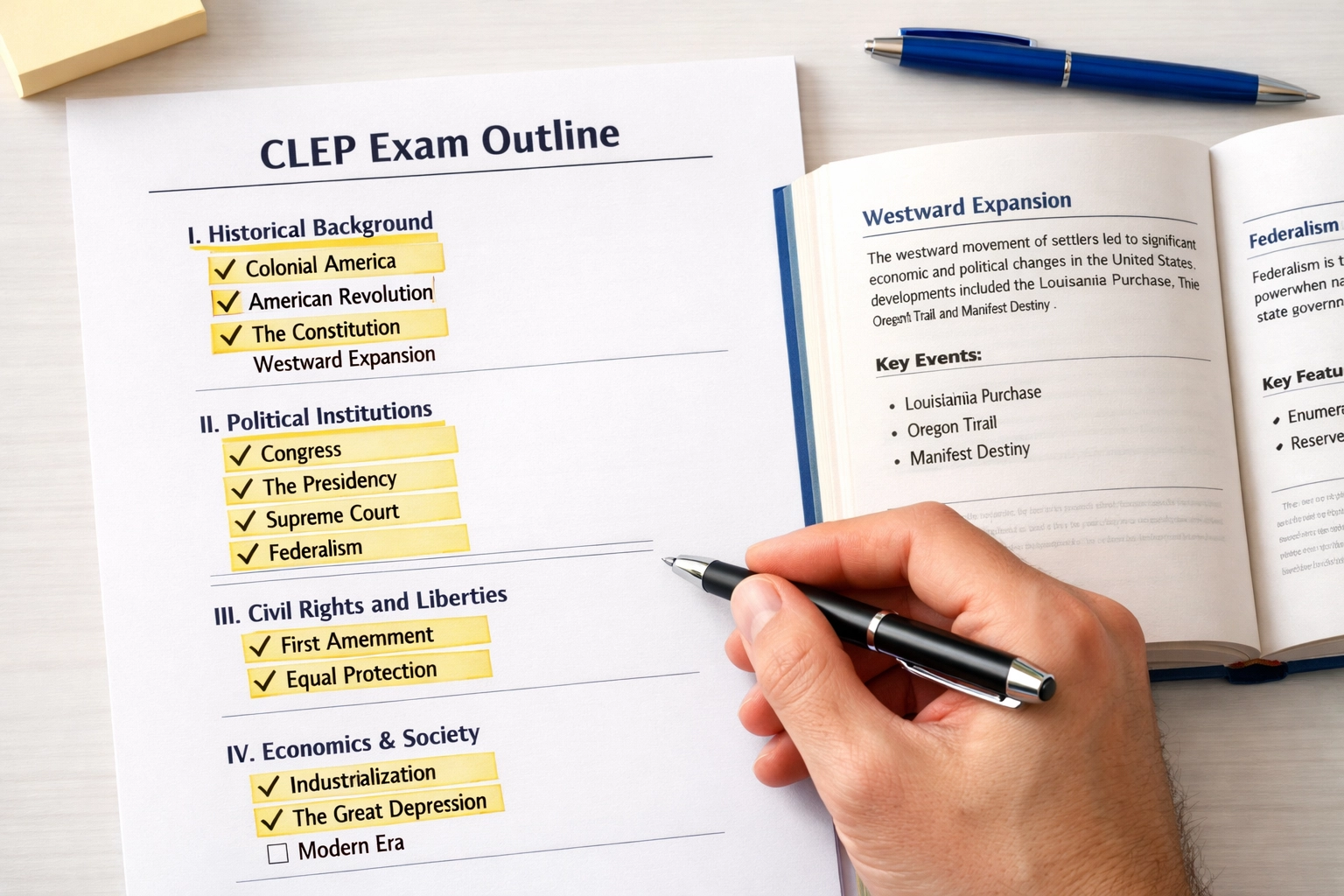
The fix: Download and print the official exam outline from the College Board website before you start studying.
Keep it visible while you study. Use it as your checklist.
As you complete each topic area, mark it off. This visual progress tracker keeps you motivated and ensures you're covering everything.
When you know the content breakdown, you can make smart decisions about where to spend your limited study time.
Mistake 7: Cramming Before Test Day
The night before your CLEP exam, you're frantically reviewing flashcards, re-reading chapters, and panicking about everything you might have missed.
Stop.
Cramming creates stress, reduces retention, and sets you up for test anxiety. Your brain needs rest before a big exam, not chaos.
The fix: Finish your serious studying at least two days before your exam. Create a structured study schedule that spreads your preparation over several weeks.
Break your study sessions into manageable chunks: 45 to 60 minutes with breaks in between. Spend more time on challenging subjects, less on topics you already know.
The night before your exam? Close the books. Watch a movie. Spend time with friends. Do something relaxing.
Trust the preparation you've already done. Your brain will perform better with rest than with last-minute cramming.
Ready to Fix These Mistakes?
Now you know the seven biggest mistakes people make with CLEP study guides: and exactly how to fix them.
The difference between passing and failing often comes down to how you use your study materials, not which materials you choose.
At Quick Credit Academy, we've helped hundreds of busy adults earn college credit through CLEP exams. Our $49 per month membership gives you access to our complete study portal with courses and materials designed specifically for CLEP test preparation. Live online group classes are available separately with class-specific pricing depending on the session.
We show you exactly how to study efficiently so you can pass your CLEP exams without wasting time or money.
Stop guessing. Start studying the right way.
Check out our CLEP test prep resources to see how we can help you earn college credit faster.
Inline Disclaimer: Quick Credit Academy provides test preparation services. CLEP credit acceptance and transfer policies vary by college or university. Check with your specific institution to confirm how credits may be accepted. Individual results may vary based on preparation and testing performance.
Quick Credit Academy provides test preparation services for CLEP exams. We are not affiliated with or endorsed by the College Board. CLEP credit acceptance varies by institution. Results may vary based on individual preparation and testing performance.
Comments